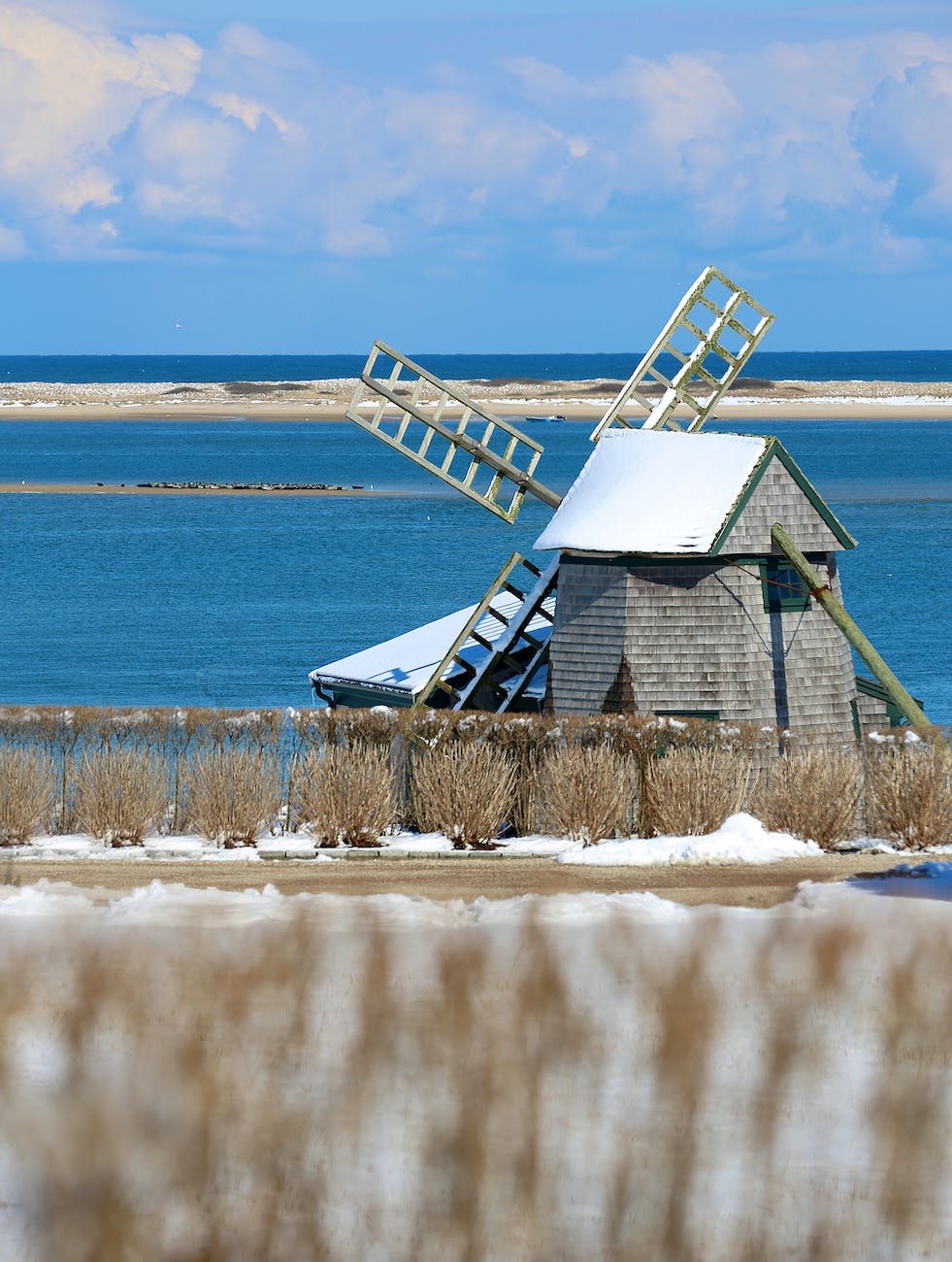
Human Ecology, Sustainability, and Transition through the History of Cape Cod

“If a man walks in the woods for love of them half of each day, he is in danger of being regarded as a loafer. But if he spends his days as a speculator, shearing off those woods and making the earth bald before her time, he is deemed an industrious and enterprising citizen.” (Thoreau 1951) wrote Henry David Thoreau, a sometimes resident of the spit of land just east of Massachusetts named Cape Cod. Thoreau took his visits to the cape between 1849 and 1855 eventually writing a book about the lives of the cape codders he met and observed. Life on the 19th century cape was transitioning again, as it has done over and over. People here are like the tides, washing along the shoals and bending them to their needs; when their climates change, always withdrawing back to the mainland.
This place, an arm extended out into the rough Atlantic, shows no outward sign of these tidal shifts of land and people, but their tales can be told in the records written by the birds, plants, and especially fish that continue to whisper histories past while people continue to plan into the future. These ecological histories, the simple ethnographies of man and nature, record what humanity’s hand has formed on the beaches of the Cape and for us to read them, understand them, and learn from them is important to its future. Today I can stand on the edge of Jackknife Cove and watch the Fiddler crabs harvest their algae fields under crystal blue waters while a half dozen Laughing Gulls make time gossiping in the shallows, it can never represent the abundance that was once here, long before Pilgrims became colonists and this land became America.
It is said that the ancient god Mashop of the Wampanoag created the Cape and islands by dragging his foot across the sands to create what is now known as Martha’s Vineyard, Nantucket, and the Cape. It was here that he taught his people how to live on the sand dunes. (Riechecky 2003) Between 6000 BCE and today, the ecology of this area has ebbed and flowed with the coming of people, sometimes sustainable and often destructive. Today, fishermen of the area attempt to preserve what is left of this unique estuary by managing their stocks and working with environmental scientists. It is my contention to draw an arc of time using historical records to cull lessons of the past to inform us for the future. If we are to live on the moving shoals of the cape and within the narrow balance between the abundance the Wampanoag had and the depressing scarcity of today we need to heed the whispers from the deep telling us tales of destruction instead of the drunken’ sea shanties of the glories of man. The tides will continue to move land, fish, and people here on Cape Cod and so, for us to understand the Cape, we must understand culture and ecology in permanent transition.

Chapter 1: The Tide is High
The People of the First Light
The earliest archaeological record of the ancestors of the Wampanoag arriving to the cape date to between 6000 and 4000 BCE. As the retreating glaciers of the last ice age slowly pulled away from New England it left shallow lands still unflooded by waters locked away in the North. (McKenzie 2011) These ‘footprints’ of Mashop would eventually be slowly flooded by the glaciers melting from the Georges Bank to the New England coastline. (Riechecky 2003) The high points, Cape and Islands would remain with its nose above water, creating two shallow bays, Nantucket and Cape Cod which eventually filled with marine plants. The shallow waters became home to zooplankton and phytoplankton which attracted small shrimp, crabs. In turn, these species invited smaller schooling and migrating fish like alewives, herring, and small mackerel who continue to make their runs into the brackish water coves, ponds, and rivers today. In the sands, clams, quahogs, scallop and other shellfish took advantage of the cycling of life occupying the niche left by decomposition. However, it was out in deeper water where the eventual economy of the cape existed in Bluefins, Sea Bass, Tuna, Halibut, Cod, and eventually the Whales who came into the bays to feed on schools of fish and then return out to sea. On the shoreline, seals and hundreds of bird species competed for shallow water and beach sea life making homes in the dunes, cliffs, and few trees able to survive rooted in the sandy soil. (McKenzie 2011) One forest, it was noted in 1614 by a dairy of a European sea captain, extended around the elbow of the cape populated with Cypress, Oaks, and fair amounts of nut trees. (Mitchell 1949)
This land was the land of the Wampanoag Indians prior to the 1600’s. These people, a subset of the greater Algonquin tribes, lived loosely here for thousands of years. It is said that Mashop taught them how to live on the dunes. Without fertile lands, like those peoples living on the mainland, the Wampanoag had no staff of life, no major grain producing crops in which to sustain themselves. (Nicholas 2002) The agricultural revolution, here, was one of reaping harvest from the seas not from the seeds they planted. However, with 43% of their diet consisting of shellfish and 15% consisting of fish the effects of learning how to live in this environmental niche was the same as other traditional peoples learning to farm. (McKenzie 2011)The Wampanoag settled down, built villages, increased their population, and intensified their social and political hierarchical structures. As White, Harris, and others have posited, the change of economy, subsistence strategies, and increases in technology regarding fishing directly effecting their culture. (Erikson 2017)
Wampanoag peoples became sedentary on the cape and islands. They, like their New England cousins, built small villages out of wigwam structures grouping together in kinship patterns. Each village contained a sachem which represented them to an overarching named collectives: the Mashpee, the Pokanoket, the Chappaquiddick, and others. These collectives were loosely led by one leader, the great sachem, which the Pilgrims in 1620 found to be Ousameequin or Massasoit as history has named him among white people. (Kittredge 1968) It is here I will note a peculiar difference between the mainland Native Americans and the Cape tribes. In several historical diaries I have read from the earliest colonists it was noted that the cape Indians did not fortify their villages like their mainland kin. From Maine to New York, tribes usually fortified their settlements in several ways, from building walls to circling structures for protection. The cape and island Wampanoag had no such defenses and probably no need for it, their lands were remote and often cut off by ocean canals cut across the dunes. They had the benefit of ocean motes or long spits of land in which they could prepare for hostilities before it arrived. For the Wampanoag, their greatest threats came from nature itself, the weather and the lack of fertile ground, the migrations of fish, and the variable nature of maritime subsistence. (Hutchins 1979) (McKenzie 2011) (Nicholas 2002)
A Study of Ecological Change on Wampanoag Culture
One way in which to look at how the changes in ecology changed the Wampanoag is to look at how their marital customs changed within the hundred-year period between the arrival of the Pilgrims and the eventual decimation of their population by war. The Wampanoag tribe of Cape Cod had a custom of polygamy in certain circumstances, much like many of the Native American and Inuit cultures in North America. However, after the Pilgrims arrived and colonists moved into their territory, the pressure in sharing resources, land, and the influence of Christianity played an important role in changing marriage customs. While other traditional cultures, like the Maasai of Africa, continue to practice polygamy despite these same pressures, the slow depletion of traditional subsistence strategies because of new colonial industries, like whaling, pushed the Wampanoag to give up polygamy.
Theories of Polygamy
Polygamy is a practice that is based in three distinct categories, cosmology, subsistence strategy/land ownership, and reproduction. Zetizen (2008,34-46) provides theoretical analysis, and illustrates polygamous marital patterns around the world and through time. By providing detailed analyses of different cultures who share either polygyny, polyandry, or group marriage systems, Zeitzen provides the important data points that relate each custom to a set of criteria which allows one system to flourish over another. For example, if a group places human labor as an important part of their production, polygyny is more likely to flourish, whereas if that same group places land or resources at the top of their hierarchy of needs than polyandry is most likely to be the custom. Each aspect of human social behavior within a biosphere of equally important environmental considerations creates certain conditions for specific marital customs and as Zeitzen points out, these customs are both fluid and not linearly connected to specific cosmological beliefs.
Theories on Cultures in Transition
In White’s Layer-cake Model of Culture he describes the forces on culture as primarily coming from technology and economy over ideology. Technology, energy, and production or economy effect the ways in which people order their lives and societies move from generalized to specialists. The human relation to economy, or most succinctly caloric intake, is a prime motivator for many. In the case of the Wampanoag prior to colonial advancement their use of polygamy was one of enhancing production or a reflection of those members who had achieved success in their hunting or fishing skills. When these subsistence strategies were changed the Wampanoag culture transitioned with that influence. This new economy thus changed not only the social framework, marital institutions, but also ideological beliefs as seen in the embracing of Christian doctrine. (Erikson, Murphy, 2017)
Unlike White, whose beliefs were that of classic cultural evolutionism, the systems of polygamy are not unilineal moving from group marriage through polygamy and into monogamy. Zeitzen (2008,134-140) provides ample evidence that even modern societies are seeing resurgences in polygamy and polyamory moving in a multilinear fashion. This directly represents Stewards specific evolution theory regarding culture. The Wampanoag evolved not out of a refining of their beliefs but because of changes within their ecologic setting. It was the Pilgrims and colonialist economy that created enough pressure to abandon the practice of polygamy. (Erikson, Murphy, 2017)
Within the structuralist-functionalist theories, Radcliff-Brown’s explanation of marriage institutions as a tool for intensification of kinship groups fits squarely into the transitional aspects seen within Wampanoag culture. Prior to colonialism, the tribe maintained itself through the function of lineage and kinship groups. For those tribes that participated in whaling activities, the need for large groups to set off to sea to hunt required greater circles of cooperation. After colonialist arrival, the Wampanoag transitioned into a free labor force which required very little from kinship groups and therefore the need to take on a deceased brother or uncles wife was no longer necessary. (Erikson, Murphy 2017) (Zietzen 2008,44-50)
History of Polygamy in Wampanoag Culture
The Wampanoag tribes, like the greater Algonquin, allowed for polygamy within their culture. For many, this was a way of maintaining a strong family unit with enough individuals to maintain foraging and hunting strategies. It was said among Wampanoag that a man who took two wives required extra help because he was a poor hunter. For many, extra spouses came as an obligation as non-sororal levirate marriage, where a man takes on a deceased kinsman’s wives and children. For those with high status extra wives came as both an economic advantage but also a sign of success. These native people did not attach any cosmological or religious beliefs to their marriage customs, only basing their polygamy on economic or social order. In the same way, the Inuit tribes described in Zietzen (2008, 46-49) also base their marriage choices on economy over ideology. This separation, between religious beliefs and economy, relates directly with why the Maasai continue to practice polygamy customs while the Wampanoag do not. (Zietzen 2008, 23-25)
The Whaling Economy and The Wampanoag Stories
The Wampanoag, prior to colonialist advancement, based much of their subsistence strategy on a combination of foraging, hunting, and fishing. For many Wampanoag, whaling was an important part of bringing in caloric needs for entire groups. As with weir fishing, seal hunting, and foraging, whaling was only one aspect of their customs for providing enough food for their people. By the time the Pilgrims had begun to expand, inviting Europeans to settle in and around Plymouth and Boston, the Wampanoag had already advanced their subsistence to include whaling. Several bands, the Mashpee, Nauset, Nantucket, and others, had been culling the beached whales trapped in the shoals at low tide. It has been noted that they had first taught the colonists how to whale and process the carcasses eventually leading to the industrial whaling of the 18th and 19th centuries. (Riechecky 2003)
Not all Wampanoag participated in whaling activities, but specifically the Mashpee, the Potawaumacut, and those tribes of The Vineyard and Nantucket islands were heavily influenced by this industry. Because of this heavy influence, the encroachment of colonialists onto shorelines where Wampanoag traditionally launched from had a significant impact on their abilities to maintain this tradition. Moreover, the use of Wampanoag on Yankee whaling vessels as hired hands, instead of continuing traditional tribal whale hunts, removed many experienced hunters from their ranks and reduced their ability to bring in whale meat and oil. This economic transition forced many Wampanoag family units to reconsider their strategies since native men signed onto Yankee ships were often away from home for eight months to two years. (Nicholas 2002) (Riehecky, 2003)
The colonialist and Yankee Whaling grew in the 1700’s on the Cape and Islands to become a massive global reaching industry. Because of its unique positioning, near both the Grand Banks and safe passage into the Southern Atlantic waters, whaling took over the economy of what is consider most Wampanoag traditional lands. Crew members where contracted and paid on a scale of rank and expertise. Wampanoag could contract on as crew members, however, because of their status among the New England colonial social order, they were paid much less and often given contracts that looked more like indentured servitude than labor. The influence of the colonial economy on the Wampanoag who were increasingly being pushed out of lands that were used for their own subsistence forced them into a cash based and contractual system instead of their own kinship-based economy. This transition not only forced the Wampanoag to reconsider marriage customs but also ideological beliefs. Even the original ‘Praying Indians” that were converted during the original Pilgrim landings were changed by the whaling industry, converting again to Baptism. (Nicholas 2002)
In the mid 1700’s the Cape Cod towns of Harwich and Eastham, a few decades before the colonies declared their independence from Britain, sold a spit of land known as Billingsgate beach to a colonist named Sylavanus Snow. This land that ran from the outer cape into mid-cape on Cape Cod Bay was the territory of the Potawaumacut Wampanoag tribe. From here, the Potawaumacut would push off for whale hunts and then return and process the whale for use. The tribe, second largest Wampanoag group with reservation rights after the Mashpee, attempted to fight for their rights to launch from Billingsgate beach. In 1758, the tribe petitioned the Massachusetts colony courts for permission to launch from their traditional hunting grounds asserting primacy rights as they had used this land long before the colonists had arrived in Plymouth. (Nicholas 2002)
Wampanoag tribal people were being abused by Yankee whaling companies during the time leading up to the court case, often signing contracts that looked more like indentured servitude, including clauses that would force their children to complete the contract in case of death or abandonment, which netted very little pay or worse, debt. With the push of Yankee whaling, tribal lands were also eroding to the point where shorelines, like Billingsgate, which were fruitful for clamming and fishing for the Wampanoag no longer were available to them. These lands were the most productive for the Cape went quickly to colonists. (Nicholas 2002)( Riehecky 2003)
Samual Cooke, a Potawaumacut tribal member and Yankee whaling steersman, led the complaint to the general council of the colony. He, witnessed by two white men, had requested permission from Snow to use the land to set up a shanty and launch area for his tribe. He was denied repeatedly by Snow, who did not believe that Cooke was a whaler and thus did not feel he had a right to the land. Snow, upon purchasing the land, proceeded to charge the Potawaumacuts for the rights to use the land. During the general council deliberations, the town of Eastham began allowing the tribal members to use Snow’s beaches in the town as a compromise to the Snow land issues. Unfortunately, the Massachusetts general council ended up ruling against Cooke and the Eastham compromise, returning all rights and use back to Snow. (Nicholas 2002)
This story illustrates the conditions that the Wampanoag were facing after the arrival of the pilgrims at Plymouth. Prior to their arrival, the entire cape was Wampanoag territory. Mashpee and Potawaumacut tribes of the Wampanoag had a rich whaling economy, so much so, that colonists that eventually funded and ran the first Yankee whaling companies were taught how to hunt whale from these indigenous people. In that short time, from 1620-1740 the entirety of the cape other than a handful of treaty-based reserves fell under the ownership of colonists. (Nicholas 2002) Their subsistence strategies, like whaling, fishing, and clamming all became highly commoditized and with that so did the Wampanoag’s traditional environmental knowledge (TEK). This TEK was used to gain entry into Yankee whaling, which unlike tribal whaling, required long months or years at sea, leaving family members without a male figurehead. It also forced women of the Wampanoag tribes to assert social and political power as well as manage family’s survival while their husbands were out at sea. This shift had consequences on the cultural framework of these traditional people which can be seen in the next case study. (Nicholas 2002) (Riehecky 2003)
To the east of the Potawaumacut resided the Mashpee Wampanoag tribe which had received treaty reservation rights. Under the treaty, Mashpee were overseen by a board of colonists, white men, who managed issues between the tribe and the encroaching colonist activities. Gideon Hawley, Congregational minister and missionary, was eventually given the power to oversee distribution of Mashpee resources as well as help in negotiating employment contracts. The board and eventually Hawley alone, were seen as guardians attempting to put indigenous people on better footing with white business owners and end the abuses that had become commonplace. (Nicholas 2002)
Hawley attempted to keep Mashpee men on the reservation as heads of households by providing an agricultural sector within the twelve thousand acres that was set aside for the Mashpee. The tribe, somewhat unique, was considered the best example of “praying Indians”, Wampanoag that took to the Congregationalist religious message early on and because of this was given favor among early government systems including receiving reserved status. In truth, this status allowed the Mashpee to survive King Phillip’s war between Narragansett and Wampanoag tribes and colonists which decimated both populations. While Hawley attempted to turn the Mashpee into agriculturalists, the tribal people made choices based on status and economy instead. (Nicholas 2002)
Hawley’s diaries suggest that Mashpee men were lured in droves to the Yankee whaling industry with promise of good pay and better status amongst colonists. With their departure, the women of Mashpee moved from foraging and horticultural pursuits into the commodified economy flush with whaling men and their cash. Hawley notes that as the whalemen entered port, the Mashpee women would turn their wigwams into taverns. Offering alcohol and sexual services, the Mashpee women, capitalized on the colonist economy and abandoned their traditional roles, especially with no males on the reservation. Hawley become disillusioned with his position of guardian over the Mashpees and the women of the tribe with him. (Nicholas 2002)
By the late eighteenth century, Mashpee women who had been building a cottage industry serving the Yankee whaling industry had gained enough economic and political power that they began asserting it in various ways. They contracted with foreigners for both work and marriage and inquired about domestic autonomy for their tribe. With their autonomy also came a mass exodus from the Congregationalist faith, of which Hawley represented, opting for a more egalitarian Baptist doctrine. This new religion also spoke to the Mashpee whaling men, who were accustomed to egalitarian roles within the genders. Finally, Mashpees began adopting colonist lifestyles, building houses over wigwams, paying for status in social places like church, and eventually building a school to educate their children. (Nicholas 2002) (Riehecky 2003)
However, not all Mashpee women became successful. Most, especially those whose husbands had died at sea, struggled under the Puritanical gender division of labor. Hawley attempted to mitigate the economic disadvantage of widows and orphans, however without their traditional subsistence strategies and open territory to forage these tribal women were left with few options in which to raise and income. Many sold crafts and food, like butter or oil, to colonist families while others, under Hawley’s tutelage were able to become domestics for local families. The female majority of Mashpees can best be seen in the census taken in 1800 where only 25 Mashpee men for 110 females. By this time, just over 100 years after the full expansion of colonists, the Wampanoag had become so sparse that other native tribespeople, African free labor, and foreigners began intermarrying to the point of obfuscating their traditional lineages. (Nicholas 2002)
Effects on Subsistence Patterns
In Sellen and Hrushchka (2004) look specifically at foraging societies and resource defenses as a link to marital custom patterns. If many of these Native American societies used marriage customs to defend their subsistence gathering strategies and those evolved over time with the introduction of Europeans into the Americas, then those same defense strategy theories may be transferrable to the experiences of the Wampanoag despite not being fully foraging. The Wampanoag had a layered production strategy that included horticulture, fishing, hunting, and foraging but that changed over time as land treaties and conditions deteriorated between the colonialists and the tribe. In Kaplan, Hooper, and Gurven’s (2009) research, they expand out from foraging societies to include all subsistence patterns to explain in broader terms how humans organize themselves. How the tribe reacted both internally, by changing customs, and externally, in preparations for aggressions, could be all linked to the defense of their resources. If these marriage patterns changed for the Wampanoag over time, then we can conclude that these specific customs are inextricably linked to production and less to do with reproduction or cosmological beliefs.
Effects on Marriage customs
From the landing of the Pilgrims in 1620 on Cape Cod to the peak of the Yankee whaling industry in the mid 1700’s, the Wampanoag transitioned from an indigenous people with little competition due to an established ecological balance between their population and resources. From research gathered, the Wampanoag prior to 1620 were decimated from disease leaving many of their villages abandoned. (Riehecky, 2003) However, this reduction of population did not change their traditional customs. It was the encroachment of colonial people and their customs, economy, and governmental institutions which forced these indigenous people to reconsider their practices, including that of polygamy. Unlike many groups who practice this marriage pattern, the Wampanoag did not base their traditions in ideology but instead on economy and resource gathering. Therefore, it was not the introduction of Christianity that ultimately ended the practice, but instead the economic transition from traditional subsistence strategies to free labor, especially in the whaling industry, that put pressure on the group. (Riehecky 2003) (Nicholas 2002) This can be illustrated best in the conversion of Mashpee women from Puritan Christians to Baptist Christianity during the mass migration of their men from traditional hunting into the Yankee whaling industry. While religion played an important role, Wampanoag women continued to embrace the egalitarian structures of their traditional society which was represented in the new Baptist religion. (Nicholas 2002) (Hutchins 1979)
It was this continued embracing of egalitarian structures, commonality, and communal life of the Wampanoag that allowed them to survive the near genocide that would follow King Phillip’s War. The Wampanoag under British protectorate would survive and continue to live on Cape Cod, especially the Mashpee who secured enough land to maintain a village that continues to exist today. The Wampanoag culture did leave their mark on the colonists living on the sand dune outposts of the cape. Their lessons on turning the sands fertile with fish, their whaling skills, and most importantly their lessons on the importance of living as ‘one people’ in a place that was often too harsh for anyone to live alone would help the colonists, soon to be Americans, balance the economy of a nation with the security of the cape.

Chapter 2: The Tide is Low
The Rising Tides of the 18th Century
Records also note that the first years colonists existed in Plymouth and cape areas, Tisquantum (Squanto to white history), helped them farm by teaching them Wampanoag traditions of using alewife and herring to add fertilizer to the weak and sandy soils to help seeds grow. (McKenzie 2011) Foraging beach plums and Sassamanash, also known as cranberries, as well as working small horticultural gardens of vine peas, flint corn, and squash provided them with enough caloric intake to make life on the cape manageable. (Mitchell 1949) It was these ecological skills that the Wampanoag brought to the Pilgrims during their first year and first Thanksgiving in a belief that colonists were intending to be peaceful. It is written that the tribes saw the first colonists as passive because their tradition was to never bring their families into hostilities and they noted the Pilgrims had brought their wives and children. (Nicholas 2002) This assumption proved to be right and wrong, while the earliest diaries of these colonists noted the helpfulness of the Wampanoag people, the eventual resource grabbing as populations expanded proved to be the end of traditional native life here. By 1675 the Wampanoag under great sachem Metacomet, or King Phillip, declared war on the colonists with allies from the greater Algonquin nation to the destruction of both groups. At the end the colonists and their economies were nearly destroyed, and the native peoples were almost entirely wiped out. Save for some ‘praying tribes’ like the Mashpee, who chose to sit out the war under British protection, many of the Wampanoag bands were lost forever. (Bride Media International, TMW Media Group 2010) (Hutchins 1979) (Nicholas 2002)
The colonists did not well receive Cape Cod, despite good press by sea captains and the colony itself; the lands were nearly inhospitable to all but the wildest of seafarers and privateers. It was nearly thirty years until some brave colonists established on the cape: Chatham in 1656, Falmouth in 1661, Harwich in 1688. However, it took until 1690 for enough people to arrive and settle here for the colony to finally incorporate and provide a measure of political power. (Kittredge 1968) By this time the Wampanoag had been pushed off onto reservations, their culture changed, and their egalitarian existence forever decimated. Under British guardianship, the remaining tribes began transitioning into free labor market roles. The men, skilled at fishing and hunting whale, disappeared on ships for months and years at a time to provide for their families while the women attempted to adapt to new economic strategies. (Nicholas 2002)
It is at this point that the ecology of the cape finally passes from the stewardship of the Wampanoag into the hands of the colonists. For thousands of years, the settled Wampanoag lived in balance with their environment despite moving through transitions into sedentary life. However, like the shifting sands that trap whales and ships alike off the beaches of the cape, time too shifts this landscape.
While the cape and its shallow waters were home to a great many species of fish few, to the chagrin of colonists, lent themselves to the salting and preservation required to trade with European cities. Fat content of fish was important to the preservation process, too much oil required more salt, an expensive commodity, to pack and ship therefore placing fish like herring out of the profit-making game. It was only cod, fished in the depths of the Atlantic from the Georges bank to Cape Cod, that was sufficient for commoditization at first. (McKenzie 2011) However, few boats could make the journeys into deeper and rougher waters. Still, migrating fish like herring and mackerel made bounty for local tables and local farming. The runs of these fish arrived in the early spring when winter’s desperation was at it’s peak and larders bare, just in time for spring farming to begin. (Mitchell 1949)
By mid 1700’s the Cape’s economy had split into three distinct industries. First in time and most continually lucrative was the cod fishing industry. With larger boats, the entry of salt making businesses near the shore, and the ability to sell to markets from Europe to the Caribbean, these fishermen often endured rough work, seas, and weather for big profits and wages. Second was the close shore maritime fishing industry made of local men and boys, often time half farmers, who took out on small rowboats to harvest what came from the shallows. This trade was exclusively local, moving catches from the cape only as far as Boston and perhaps New York via smaller sloops along the coast. It was noted in 1790 that fish markets near Boston carried near 110 different varieties of fish, while only about 80 were for the table, being sold. The uneatable species still remained commoditized by farmers and country folk for fertilizer which provided ample opportunity for cape codders to make extra money while waiting for crops to mature or fishing crews to bring work at the docks. Finally, during the mid to late 1700’s the rise of the whaling industry dominated the capes economy bringing in a new wave of immigrants not seen before, whalemen, who changed the landscape and culture dominated by the Congregationalists living here. (McKenzie 2011) (Nickerson 2008)
Still, the original Plymouth colony leaders saw troubled waters ahead for its population. In 1670 and through to 1710, it passed measure to ensure the fishing stocks around the bay remained healthy. (McKenzie 2011) The colony must have seen declines in local fish populations to a point where action was required. While the Wampanoag had traditionally used weir and seine type fishing to gather for themselves, the colonists also did, but on a much greater scale. (Riechecky 2003) (Mitchell 1949) Both these methods involved netting or trapping fish during their runs up the brackish rivers en masse, unlike hook and line fishing. If enough colonists blocked and caught spawning fish before entering into their reproductive grounds, within a few years those stocks would have seen a massive decline. That is exactly what happened. In 1684 a contract was signed between Plymouth Colony and William Clark for 30 pounds silver to own the entire bass fishing stock on the cape. (McKenzie 2011) It was on the contingency that no mackerel could be fished during the contract. Why was this important? Bass chase mackerel for food during their runs to spawn and the experienced sea captain probably knew that. He probably saw the seine fishing of mackerel as the reason for his decline in bass stocks and made that conditional to his contract. Unfortunately, within short time, mackerel fisherman petitioned Plymouth to revoke the contract.
Herring and alewife, though, were the most utilized fish on the cape and New England. In the spring millions of these small fish run up ocean rivers to their spawning grounds pushing through streams as small as two feet. This made them a good resource for winter ravaged people and animals alike. (Mitchell 1949) Small weirs and stone traps set along streams would net a resourceful person pounds of fish for use in both eating and fertilizer. However, the abundance of fish and its attractive migration patterns made it too easy to overfish them. As early at 1650 towns were already regulating herring and alewife fishing and by the mid 1700’s nearly all of the towns around the cape and mainland had permitting and regulations. Herring spawn on three year cycles, so colonists who overfished streams one year would not see that impact for years giving local residents a belief that it was not effecting the fishing stocks. However, many local towns did notice, and some went to great lengths to protect these important fish. (McKenzie 2011)
The town of Sandwich is notable in the historical records for being one of the few towns on the cape to make their herring and alewife stocks communal. The township hired two fisherman per year to collect the fish during the runs and dole their catch out to residents on a per pound basis, daily. If a resident did not retrieve their catch within two days, the fishermen were then to pass the allotment to the rest. (Kittredge 1968) This communal system continued on for nearly one hundred years, from 1651 through to the last contract in 1741, continually preserving the runs through increased pressure by river mill builders and rising export prices. Counter to all general theory regarding the market forces of capitalism, the town of Sandwich avoided the pitfalls that other cape towns fell into, the demand for garbage fish in the West Indies to feed the rising slave trade and its lucrative business. After 1741, the town opened up permitting for commercial fishing within its borders, allowing for certain catches to be taken as long as the township received payment on each barrel. This regulation was in response to the market price increases for herring and alewife but attempted to balance that with the needs of the local people. (McKenzie 2011)
As the 18th century drew to a close and the ravages of the Revolutionary war on Massachusetts small colony towns slowly healed and looked to the future. The cape and islands were not yet overly populated. Inspired by their colony roots and harsh living conditions, residents had managed to move through this century of transition with a hand firmly placed on maintaining its subsistence through rules, fees, and communal rights. What colonists, now American citizens, learned was that survival required management of resources. While profits on local fish may earn these towns sterling pounds, families who weathered the conditions of poor soil and maritime winters knew that one could not eat a shilling with cranberry relish, but a dutch oven filled to the brim with fish stew would surely be a feast for all.
The Rise of the Fishing Industry
It is noted in Chatham history that twenty and seven fisherman of the town joined the new Republic against the British during the war but at the end only four men remained. (Paine 2000) That history was repeated along the cape towns who joined up to battle the British aggressors, as they were seen, to secure their rights to what they considered their land, their sea, and their way of life. Cape Cod had remained a backwater place up until the war with only the hardiest of colonist families taking root here. These families, known by their names that are immortalized in roads, houses, open common lands, and by the people who still live and work here to this day.
As the new republic grew, the cape seemingly turned its sails toward the new economy, one that intended to bring profits to those who are industrious. The industry on this spit of land had always been based in the oceans and rising up like the tides, sea faring became the economic engine for the next century. They began to rebuild their fleets of larger cod fishing and whaling boats and with that came a new brand of subsistence, capitalism, which aimed to provide the cape residents with enough money to finally be recognized as more than a colony outpost. (Kittredge 1968) During the years after the Revolution, towns like Provincetown went from a few dozen families to hundreds. (McKenzie 2011) The rise of the whaling industry brought with it free African labor and foreigners from Portugal who upon landing here enjoyed the cape so much they eventually called it home. The upper cape exploded with industry, ten saltworks now stood producing enough salt a year to satisfy the cod fisherman who continually returned from Belle Isle, Newfoundland, the Georges banks, and back filled with cod. No longer were fishing boats forced to stop on empty beaches to salt their catches, instead speedily returning home to a fish production industry ready for them. Cod was not the only industry taking from the sea during this century, oyster carries with the capacity to take thirty tons apiece, whalers, and dozens of small crafts trolled along the coast for scallops and small fish alike. (McKenzie 2011)
Chatham, who lost so many to the war, by mid 1800’s had a fleet of twenty five vessels leaving from port, half of them heading to the grand banks while the other half divided time between Nantucket shoals and Nova Scotian waters. It is said that over two hundred men and boys were employed and their annual catch of cod alone equaled 2000 tons, only half of what Provincetown produced. (Nickerson 2008) Yet the market was still being restricted and the Yankee fishing crews of the cape had to contend with political pressures. The British, still stinging from their loss to the colonies, were driving off Cape Cod fisherman from the coast of Canada, stealing their catches and damaging their vessels. While this did not prevent them from fishing in their usual territories, the pressure did force them to look elsewhere. (Kittredge 1968) The Georges banks had held much superstition by sailors, its unique geological layout created rip currents so strong folk lore notes that some sailors recall seeing the banks completely emptied of water by the tides rushing over these underwater seamounts. Despite fishing around the Georges, nary a sailor would be brave enough to drop anchor in such a wild part of the sea until 1821 when one sailor dropped anchor and came home safely from the banks and ushered in a new era of fishing. (McKenzie 2011) For Cape Cod fisherman, this was like hitting the motherlode; an inexhaustible supply of cod and halibut that brought big money at port. So, as the cape saying goes “Sailor lads have gold and silver, Fisher lads have naught but brass” (Mitchell 1949) the era of profitable maritime fishing slowly fades as technology, ingenuity, and market demand pushed the cape’s fleets out to sea.
Technology increases rapidly in the deep-sea fishing industry during the mid to late 1700’s, from hook and line, to dory work, to trawling with long lines baited with hundreds of hooks left out at sea with buoy the ways in which the fishing crews worked excelled rapidly in efficiency. (McKenzie 2011) Another aspect of fishing that changed on the cape was the culture of ‘fishing families’. Since colonists had been inhabiting the cape for a century at this point families with fishing skills intensified and built companies on the labor of fathers and sons. In 1789 a fishing vessel was lost on Nantucket Shoals with a crew of eight Yarmouth men, six of whom were named Hallett. In the storm of 1841, that downed several vessels of the twenty lost to the town of Dennis, twelve were named Howe. (Kittredge 1968) Fathers who were crewmen or captains had their sons, as young as eight or ten, sign on to be cooks or bait boys until they could master the seas and the fish themselves. With this familial fishing culture also came a culture of captaining, unlike traditional captains who often came from naval vessels, that was casual and democratic. Oft said on a Cape Cod schooner, if the brother took too close rounding Monomoy that his siblings would be close behind to tell him. A story goes, “Coming up with the fishing fleet off Highland Light and tearing past with skysails set, the foremast hands of a lordly clipper looked with contempt at the tiny schooners and wondered how men could live on board them. The fisherman cocked an eye at the towering canvas of the clipper, spat over the side, and ejaculated, ‘Monkeys on a stick.’ And so each went their way.” (McKenzie 2011) The cape fisherman were coming into their own, with their own culture and identity giving them a sense of dignity of work not seen prior to the Revolution. Perhaps democracy was changing the people.
The increase in deep sea and banks fishing meant that offshore efforts required to be doubled to support the bait needed. Moreover, as the technology on the banks fisherman’s boats was increasing so was the same happening on the coastlines. Three factors influence the movement away from communal fishing management into what some would consider runaway harvesting. The use of new netting arrangements, new scientific reasoning regarding the lifecycles of fish, and an overall intensification of productivity set the stage for Cape Cods massive culling of fish during the 19th century. (McKenzie 2011)Second was the population explosion on the cape to support the banks fishing. From 1790 to 1850 the population of the cape doubled to 35,000 people. (Kittredge 1968) Between the increase in deep water fishing, the peak of the whaling industry, and the sudden nostalgia for seaside towns marketed by the likes of Ralph Waldo Emmerson who writes, “Live in the sunshine, swim the sea, drink the wild air.” (Emerson 1860), Cape Cod’s own regional identity, like that of its fisherman, begins to anneal. (McKenzie 2011) Finally, as with the cape’s own population, America itself begins to see a population expansion, especially in the congealing of major cities like Boston and New York which further intensifies harvesting from the sea. Since Cape Cod has had no other economy even as far back as the Wampanoag eras because of its poor soils and tempest like climate, fishing and harvesting from the shores becomes an ever-intensifying production to raise living conditions beyond what has always been considered a poor outpost. (Kittredge 1968)
By the end of the 19th century, weir fishing and the building of artificial canals to trap inshore fish compounded by the syndemic factors of increased population density, economic supply and demand, and the efficiency of new technology leads cape fishing into a dark era, one that would decimate the economy for nearly a hundred years. Even by the 1860’s clamming was already seeing a decline in hauls, mackerel runs began disappearing for seasons, and the herring runs, once protected by communal distribution practices, gave way to the increased burden of commercial fishing. (McKenzie 2011) All told, by the waning years of the 1800’s, the cape and islands began hearing the whispers from the deep and took note. Even the fishmongers who paid the men who braved the oceans could see the ecological warnings, “I have handed a man a quarter of a dollar, and even less, for his day’s work in fishing; and they would say their arms felt as though they would drop off…. What are they going to do next winter? If they are well they may keep out of the poor-house.”. (Kittredge 1968)
Hook, Line, and Sinking Fish Stocks
In the late 19th century, failing fishing seasons reported by inshore hook and line fisherman across New England forced governments to address a growing concern. The use of pound, weir, and seine fishing rigs had increased in numbers along the New England shoreline bolstered by investments by local people seeking to make money on the strong fishing industry and for the need of cheap bait by banks fisherman who were bringing in the big money fish. The environmental impact of these fishing technologies that increased catch sizes was seemingly dramatic to small, local, inshore hook and line fisherman who had traditionally only set out their boats to bring food and resources back to their family and local communities. Between the 1860’s and 1900, local, state, and federal governments faced complaints and redresses to the situation. (McKenzie 2011) Yet, providing evidence and drawing policy would not be easy.
The claims by local hook and line fisherman seemingly had major ground support by the people and even by the political climate at the time, however, support from the side of the pound investors and banks fisherman had a different tone. It was noted, over and over, that both the industries of fishing, pound and banks, employed more workers, brought more revenue to these coastal outposts like Cape Cod, and were a necessary requirement to the country who had set about specializing labor into big city industries where cheap food, like herring and cod, was needed to feed apartment dwelling workers. The local identity of the Cape Cod fisherman, one who fished for himself, fished for survival, and fished for his community was no match for the economic and political status of ‘industry’. (McKenzie 2011)
Government inquiries and decisions took years to complete, taking in hundreds of personal stories of the declining stocks as well as ‘expert’ data by pound and hook fishermen alike. In both Rhode Island and Massachusetts, the end result was a concerted effort to deny local fisherman their technical environmental knowledge of their territories, instead placing the burden of truth on the burgeoning natural science field and simple raw data. Both state’s reports and findings suggested that while there had been a decline in fish numbers, there was not enough evidence to suggest it came from the ever-expanding stationary pound and weir fishing rigs. In truth, the economy of the fishing industry in New England was continuing to grow, pulling in more fish than ever, however, representatives failed to realize that one of the reasons this was happening was because more banks and pound fishing companies were being added to the whole. While they saw increases in catches, what they were actually looking at was a decrease in fish, but an industry pressured by market demands that was pulling every last fish out of the ocean. (McKenzie 2011) (Schwind 1976)
Following both state inquiries was also a Federal Congressional inquiry into the fishing industry of New England and while attempting to put science before opinion, the lead researcher was still forced to concede that the industry fisherman had rights to the fishing stock and that science could not commit to saying that pound fishing was the issue. They used an assortment of reasonings beyond the static pounds. Predatory fish, like Bluefish, were seen in record numbers and was attributed to declines in small fish populations. Herring and Alewife runs were unaffected by pounds and weirs because scientists stated that they would not get trapped in pounds not associated with their rivers and streams, a fallacy. Finally, the scientists argued that the ocean itself was evolving, changing its character, and that it would be foolish to assume that man himself could be a part of that process. (McKenzie 2011) (Macfarlane 2006)
The end result of the legal battles between pound and hook fisherman was a washout, with state and federal commissions not willing to stop the environmental degradation seen by local inshore fisherman. While some local communities passed regulatory decisions to limit pound fishing, it failed to stem the losses that people had been seeing underwater for decades. By the turn of the century, small fishing families were desperate and without any ability to support themselves by other means, began leaving the Cape for industrial centers or simply moved West. (Kittredge 1968) While Provincetown saw a slight increase in population due to the banks fishing industry, the rest of the cape emptied out nearly half the population in twenty years. This left the cape culture and local economies floundering and where once houses were being built and businesses opening, a slow decline in infrastructure slowly creeped along the coastal communities. (McKenzie 2011)
Chapter 3: The Tide is Always Moving
The Pristine Coastline
The ironic end to the decimation of the local fishing stocks around the cape was originally sowed by the seeds of writers like Thoreau and Emmerson and coastal pastoralist painters who saw the coastlines as more than just wastelands of sand and the industry of fishing. They offered a different perspective of the American coasts, one of pristine nature and dewy salt water breezes that was good for the body and mind. People who were trapped in cities were offered an escape from city heat during the summer months with rail lines, once used to move fish out of the coasts, now offering travel to them. The Cape, now emptied of its working-class fisherman families, had ample room to accommodate these new guests. (Thoreau 1951) (McKenzie 2011) (Kittredge 1968)
First came the artists, who planted themselves in the desolate sandy beaches of the outer cape and stayed for a season or two. Then more arrived from city rails hitching their hopes on stories of rest and relaxation on this clear and pristine area known for its quaint fishing villages and ecological abundance. The irony was that the cape itself was becoming barren of biodiversity both under and above the waves of the ocean. With most of the trees harvested for boats and buildings, the cape was open against the winds and water that battered it in winter. Species of fish, once considered throwaway, now no longer were found. The shellfish industry had dragged the sandy bottoms between Long Island and Maine of much of its good catch, leaving only uneatable specimens like horseshoe crabs in its wake. (McKenzie 2011) The whaling industry had decimated the sperm whale and other species from most of the oceans, so that once where these massive creatures would beach and feed a village weekly, now were rarely ever seen off the coasts. (Mitchell 1949) (Schwind 1976) The abundance that was once regarded in sea captain’s diaries during the age of the Wampanoag and even the Pilgrims was now a desert, each layer of the web of biodiversity effected by the over-fishing of industry.
“But this shore will never be more attractive than it is now. Such beaches as are fashionable are here made and unmade in a day, I may almost say, by the sea shifting its sands. Lynn and Nantasket! This bare and bended arm it is that makes the bay in which they lie so snugly. What are springs and waterfalls? Here is the spring of springs, the waterfall of waterfalls. A storm in the fall or winter is the time to visit it; a lighthouse or a fisherman’s hut the true hotel. A man may stand there and put all America behind him.” (Thoreau 1951) Thoreau writes of his visit to the cape. He arrives at the time of environmental decline and publishes his book on this spit of land during the crisis years at the turn of the century. Thoreau, a man known to exalt the splendors of nature and draw back arrows of contempt for the modernity of cities, fails to recognize the destruction that exists under his feet. He walks the thirty miles of beach from Eastham to Provincetown and unlike the local fisherman, who were fighting battles to save their economy and ecology at the time, Thoreau only remarks on the beauty of the ‘pristine’ cape, unspoiled by modernity’s hand.
However, he was right, the shore would never be ‘more attractive’ than it was then, but not for environmental reasons. It was its proximity to the ocean, it’s natural separation from the mainland, and its emptiness that drew thousands of people to Cape Cod during the 20th century. Cheap housing, cheap food, and cheap land grabbed the attention of the tourist industry which sprung up to accommodate the second-hand Thoreau’s of the day. Provincetown, the last bastion of the fishing industry from the 18th and 19th centuries, faded as artists, poets, and leisure classes came to escape the pressures of mainland life. (Kittredge 1968) Chatham, once a strong fishing village, turned into a seasonal village for the elite class willing to preserve the air of the past for the privilege of slumming with old sea captains. (Sargent 2009) (Nickerson 2008) The mainland cape, close to the industry Thoreau maligned, became bedroom communities for those willing to travel to work for the joy of living along the shorelines.
By the 1950’s and 1960’s Cape Cod had become the inauthentic authentic tourist destination to relive the whaling and fishing industry of yore. (Kittredge 1968) A dozen or more books line the shelves of Chatham’s Eldridge Library published during this time that speak the words and history of the past to new transplants seeking to take on the identity of the Cape Codder. What is it to be a Cape dweller? It is to walk the sands and look for gifts from the sea, which was a custom of 17th-18th century cape folks who sought to grab what they could from the washed wreckages of the sea or perhaps a beached whale which could bring a handsome price. It was not to collect shells. To ‘mooncuss’, it was said was a Cape Cod habit of walking the beach at night, however its roots lie in the treachery of the early people to light fires to trick boats into crashing on the shoals only to rob them. A Cape Codder always has a warm house, but the ways in which original cape houses were built was out of necessity and survival, not to invite people in. The tourists grabbed ahold of cranberries as if it was some magical fruit, while the Wampanoag and early cape folks ate this bitter fruit because nothing else would grow. (Mitchell 1949)The new cape people were re-writing the history here to suit their beliefs of authenticity as do many tourists do when they visit exotic places. What they never wrote or talked about was why the sea captains and fisherman in their history books were no longer around.
The New Cape Cod Fishing Industry
In 1991 a group of local fishermen banded together to create the Cape Cod Commercial Fisherman’s Alliance. In a world of ever increasing industrialization of our food pathways, these fishermen and their supporters saw a need to protect the small boat practices that have a 400 year history on Cape Cod. They serve all types of fishing, from the sea clammers to the banks fisherman, in hopes that their movement will not only continue to pass the traditional environmental knowledge that uniquely is carried in the men who work the coastlines every day. Fighting against the strong independent spirit of the cape’s fishing identity, they bind themselves together to support a common cause: maintain the industry’s profits, provide a voice in governmental regulating, and develop and maintain a system of sustainable fishing. (Cape Cod Fishermen’s Alliance 2017)
This group builds on the history of the local fisherman, the same group that signaled the alarm early about the effects of overfishing their territories. Together they share ecological knowledge, but more importantly work with scientific studies to help develop methods and systems to prevent what happened at the turn of the 19th century. (Cape Cod Fishermen’s Alliance 2017) In 2014 a joint initiative between regulators, ocean environmental scientists, and Chatham banks fisherman sought to study the Barndoor skate population which had been placed on the no-catch list a decade earlier. With declining fish stocks throughout the 1900’s, fisherman seeking to maintain a business, fished species that were available. Between the 1960’s and the 2000’s, Barndoor Skates populations fell nearly 90% and forced fisherman to abandon the species. These Skates, with wide wings and flat bodies, are the largest of the flat fish that are commonly eaten but their long lives, slow growth, and late maturity and reproductive cycles makes them specifically vulnerable to overfishing. Much like herring with its three-year spawning cycles, Barndoor skates make it difficult to understand how much fishing is too much. Local fisherman like Jim of Chatham began noticing the amount of skates they were catching in their gill nets and reported it back to the Alliance. In turn, the Alliance petitioned NOAA, the federal regulator of fishing, to loosen restrictions. “I had been telling the guys at the Fishermen’s Alliance just how many skates and dogfish we’d been seeing in the ocean. They sprang into action and took us to Washington to talk with NOAA Fisheries directly. Recent scientific data had shown that skate populations were on the rise and the agency ended up increasing the overall amount of skates that fishermen could land.” (Cape Cod Fishermen’s Alliance 2017) The study aimed to train fisherman how to take scientific data on the Barndoor skates and report back, this study lasting several years helped move regulators and now Chatham fisherman, like Jim are returning the skates back to people’s tables responsibly and sustainably with the knowledge that both he and environmental scientists worked together to create.
What of the irony of the new cape’s population, the one who arrived to fill in for the decimated fishing industry? Their legacy of appreciation for Cape Cod’s unique environment and history has helped the Fisherman’s Alliance survive and thrive. Each year the Alliance gathers with local businesses and restauranteurs to throw a massive fundraiser, The Hooker’s Ball, which nets the group enough funding to support the local groups endeavors to create a small, local, sustainable fishing industry. Throughout the year, local fisherman give lessons, lectures, and tours on their vessels to local tourists and seasonal residents to help pass their traditional knowledge and the importance of their work on to the public. (Cape Cod Fishermen’s Alliance 2017)
In October of 2017, the Fisherman’s Alliance sent the word out that herring was once again being threatened, not by local fisherman, but by foreign trawlers moving along the coastlines. In the 1960’s and 1970’s decimated herring runs forced the federal government to pass legislation that gave coastal communities, like Cape Cod, a 200-mile buffer zone from industrial trawling of fish. The football field sized nets of these trawlers drag through the water picking up entire runs of herring and other fish, both inefficiently and damaging the future of fish stocks. Today, those regulations are now rolled back to three miles and the trawlers can be seen by locals and fisherman alike. Noting the irony that local Cape fisherman and residents alike cannot fish for herring at all, Joe says, “…local people can’t take herring. They can’t even take one. But they can come in and decimate a herring run.” He also says that the fish entering into the foreign industry trawlers end up as fertilizer in Asia and the Pacific islands, not on the plates of Cape Codder’s, bait for bank fishing crews, or food for the hundreds of predatory fish species and whales that create the biodiversity that the area needs to maintain sustainability. In December of 2017, the Alliance will petition the fishing commission to push back the buffer zone once again so that the Cape and its fisherman can return to building a sustainable fishing industry. (Cape Cod Fishermen’s Alliance 2017)
Skysails at Full Mast
The long arc of history on Cape Cod provides us with the evidence to support ecological sustainability through local people and local fisherman. Conservation partnerships with local people are successful globally when the partnerships were small, goals and responsibilities clearly specified, and local people were given a voice in the decision making process. (Mulder 2005) This can be seen throughout Cape Cod’s history, in the 18th century when fishing was becoming a major industry on the Cape, local towns developed commons or fishing traditions that protected the fish stocks for the whole community. The Wampanoag, whose practices of sustainability included traditions of harvesting as a group and taking what only the community required. Even into the 19th century, the towns who regulated the taking of inshore fish by pounds or industrial fishing, saw the least amount of pain from the fish population declines. It was the end of the support for local fisherman’s traditional environmental knowledge during the end of the 19th and into the 20th century legal battles and the passage of that expertise to scientists and policy makers that created the perfect storm for the decimation of fish populations.
Another factor in the Cape’s environmental management challenges is the tourism brought about by what could be considered the first ecotourists, writers like Thoreau. While the lands of the cape have changed dramatically between 1900 and 2017, with massive building and infrastructure to support these migratory populations, the fact that they can be harnessed to support environmental efforts at sea provides a glimpse into how events that have gone completely wrong can be slowly righted. A sign of that changing course is the return of the Cape Cod seal population which has been primarily supported by tourists who enjoy visiting these loud neighbors on the piers and beach fronts and take a picture. The unintended effect of the return of the seals has been the following shark population, once thought to be endangered and possibly lost. Now, Chatham boasts the Atlantic White Shark Conservancy which supports a phone application that allows locals and tourists alike to spot, mark, and track sharks along the coast and informs people of the importance of their presence in our coastal waters.
While in many places around the world, environmental conservation and preservation exists in a vacuum of humanity, the truth is that people are as much a part of their environment as the fish and plants. Traditional people have become the voice for many efforts to preserve and make sustainable areas that support biodiversity, but that is only a small fraction of the places on this planet that require ecological attention. (Mulder 2005) Where do conservationists draw the line on traditional people? On Cape Cod, there is a four-hundred-year ancestral lineage of fisherman that continues to fish the waters of these shoals and the banks. Family names, like the Nickerson, Doane, Howe, all reach back into recorded time as original colonists and continued Cape Cod clans. These clans accepted and continued the subsistence strategies that the Wampanoag had passed to them during the early years after the colonists’ arrival.
Looking at the ways in which the indigenous Wampanoag merged with colonists, forced and otherwise, we begin to see a distinct culture on the cape emerging during those transitional years as economies began to build around the traditional subsistence strategies of the Wampanoag. This culture, one of commons, commonality, and a belief in communal living as a tool against the harsh life on these sand dunes continues through to this day. If one was to connect the cultures of indigenous people to places of biodiversity than would these modern local fishermen be one of those groups? In truth, history shows that they, like many indigenous people, have fought and lost against the depletion of their ecosystems by economic forces. (Mulder 2005)
The tentative successes that the Fisherman’s Alliance has had in twenty years, combining their traditional environmental knowledge with the economic force of seasonal and transitory tourism, it should be considered a sign that conservation and preservation groups globally need to reevaluate their definition of ‘traditional’. The current Cape Cod local fisherman continue to carry the ecological knowledge that the Wampanoag first taught the Pilgrims about living on the harsh spit of sand dunes they eventually called Cape Cod. That knowledge of tending to the seas as mainlanders tend to their farms has never broken in four centuries and neither has the cultural tradition of the Capes inhabitants seeing survival as a communal prospect and not an individual challenge. That can be seen best in the invitation of new Cape Codders into the culture of supporting the local fishermen.
Time will tell if new sustainable initiatives and the new local fishermen’s alliances will bring Cape Cod back to its former ecological glory. The migratory fish runs are seeing a rebound as are the local shellfish takes partially because of protections fought for by locals. (Cape Cod Fishermen’s Alliance 2017) The Cape, though, will continue to reach out into the Atlantic Ocean as it always has, and its residents will always look out from the shoals and await the bounty of the seas or tend to their harvest of fish like so many farmers do around the world. Even after 8000 years of inhabitance, this sand dune that Mashop created still seems like a safe outpost against the world and Thoreau was right, one can still turn your back to America’s industrial mainland and just stare blissfully out on the open seas and forget it even exists for a moment. Perhaps that is why this land has attracted kindred souls, willing to coddle together an existence out of sand and surf and weather the tides of change, just for the privilege of calling oneself a Cape Codder.
References
2010. King Philip’s War: 1675-1676. Directed by S. and Bride, J. H. Baker. Performed by Bride Media International, TMW Media Group.
Cape Cod Fishermen’s Alliance. 2017. Small Boats Big Ideas. November 30. Accessed November 30, 2017. http://capecodfishermen.org/.
Emerson, R.W. 1860. The Conduct of Life. New York: Penguin.
Erikson, P.A. and Murphy, L.D. 2017. A History of Anthropologcal Theory. Toronto: University of Toronot Press.
Hathaway, C. 2000. From Highland to Hammerhead: The Coastguard and Cape Cod. Chatham: Hathaway Publishing.
Hutchins, F.G. 1979. Mashpee, the Story of Cape Cod’s Indian Town. West Franklin, NH: Amarta Press.
Kaplan, H.S., Hooper, P.L., and Guryen, M. 2009. “The Evolutionary and Ecological Roots of Human Social Organization.” Philosophical Transactions of the Royal Society 3289-3299.
Kittredge, H. 1968. Cape Cod: Its People and Their History. Boston: Houghton Mifflin Company.
Macfarlane, S. and Peluso, C. 2006. Tiggie: The Lure and Lore of Commerical Fishing in New England. Bloomington: Author House Publishers.
McKenzie, M. 2011. Clearing the Coastline: The Nineteenth-Century Ecological and Cultural Transformations of Cape Cod. Hanover: University Press of New England.
Mitchell, V.E. 1949. It’s an Old Cape Cod Custom. New York: Vanguard Press.
Mulder, M. and Cppollillo, P. 2005. Conservation. princeton: princeton university press.
Nicholas, M. 2002. “Mashpee Wampanoags of Cape Cod, The Whalefishery, and Seafaring’s Impact on Community Development.” The American Indian Quarterly 165-197.
Nickerson, J.A.jr and Nickerson, G.D. 2008. Chatham Sea Captains in the Age of Sail. Charleston: History Press.
Paine, J. 2000. Cape Cod Masters of the Seas: Extraordinary Tales of Brewsters’s Shipmasters and Packet Captains. Wrackline: Wrackline Writers.
Riechecky, J. 2003. The Wampanoag: The People of the First Light. Mankato, MN: Bridgestone Books.
Sargent, B. 2009. Sea Level Rising: The Chatham Story. Argen, PA: Schiffer Publishing Ltd.
Schwind, P. 1976. Making A Living Alongshore. Camden, Maine: International Marine Publishing Company.
Sellen, Hrushchka. 2004. “Extracted-Food Resource-Defense Polygymy in Native Western North America Societies at First Contact.” Current Anthropology 707-714.
Thoreau, H.D. 1951. Cape Cod. New York: Norton Publishing.
Wilson, Acheson, Johnson. 2013. “The Cost of Useful Knowledge and Collective Action in Three Fisheries.” Ecological Economics, 165-172.
Zeitzen, M. 2008. Polygamy: A Cross Cultural Analysis. Oxford: Berg Publishers.